Melathy
Connecting a mobile health prototype to its backend and inference service.
I worked with the Cloud Computing team on backend APIs and cloud setup connecting the app and inference service.
A health concept with three technical tracks
Melathy was a six-person Bangkit Academy capstone in 2023. The team’s concept was an Android app that could use a face image to estimate vital signs. Mobile Development built the user interface, Machine Learning worked on image processing, and two of us on the Cloud Computing track connected those parts through services. My work covered backend APIs and Google Cloud setup with the other cloud teammate.
The intended health use was broader than the demonstrated prototype. The captured result classifies an image as human or not human. It does not show a heart rate, breathing rate, blood pressure, or oxygen reading. I present the work as a service integration prototype, not a validated medical measurement system.
Separate app data from inference
We separated an Express application API from a FastAPI inference service. The application side defined account, profile, image-upload, and result-history routes. Firestore held user and history records; Cloud Storage held uploaded images. The API could pass an image location to the model service and map the response back into a result the app could display. That boundary allowed the mobile and model tracks to work against an application API rather than putting storage and model execution inside the phone app.
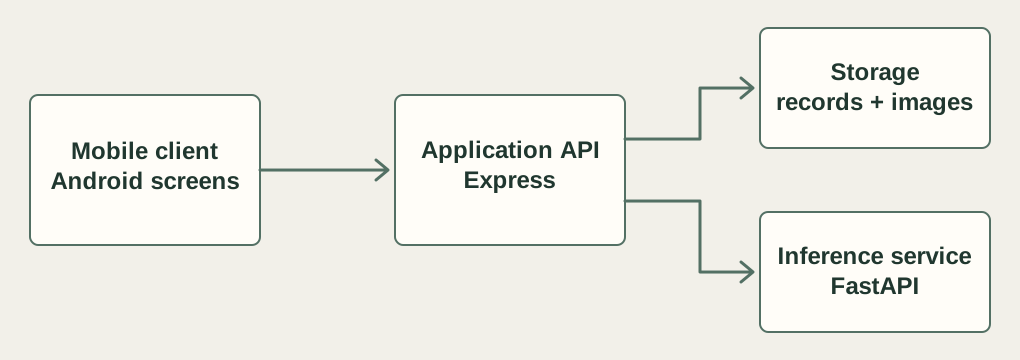
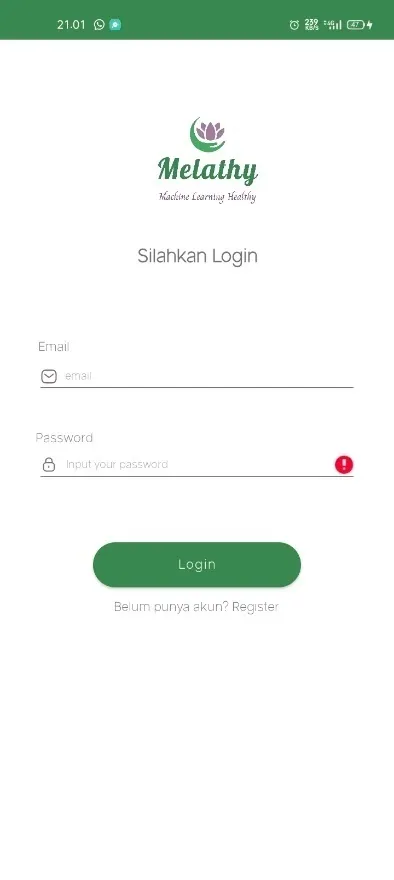
I configured and tested API requests and cloud compute setup during development. Cloud Build files prepared the services for container deployment to Cloud Run. One inference request in the project code still pointed to a local service address, so I do not claim the remote route worked end to end. The login screen in the cover comes from the mobile teammates and shows the product context for my API work.
What the prototype taught us
The capstone demonstrated collaboration across an Android client, application data service, image storage, and an inference boundary. It did not provide retained clinical validation, a production deployment record, or a supported vital-sign performance figure. The gap between a successful upload and a trustworthy health result is substantial: the service contract must specify measurements, units, failures, and how a result was checked.
For another version, I would define that response contract with the model and mobile teams first, then verify the full request path and compare any proposed vital-sign estimate with appropriate reference measurements before presenting it for health decisions. Melathy gave me practical experience integrating the tracks while showing exactly where prototype evidence stops.